A large contract is signed by an industrial manufacturer. The monthly production demands increase, but the factory isn’t gaining floors, employees with experience, or hours in the day. Although adding another shift may temporarily boost production, it could also bring new labor or supervision, as well as additional training and requirements for quality control.
These situations reveal a very important reason for robotic automation. Robotics isn’t simply about replacing a person with an automated machine. A suitable application can alter the way in which manufacturers make use of their capacity to produce.
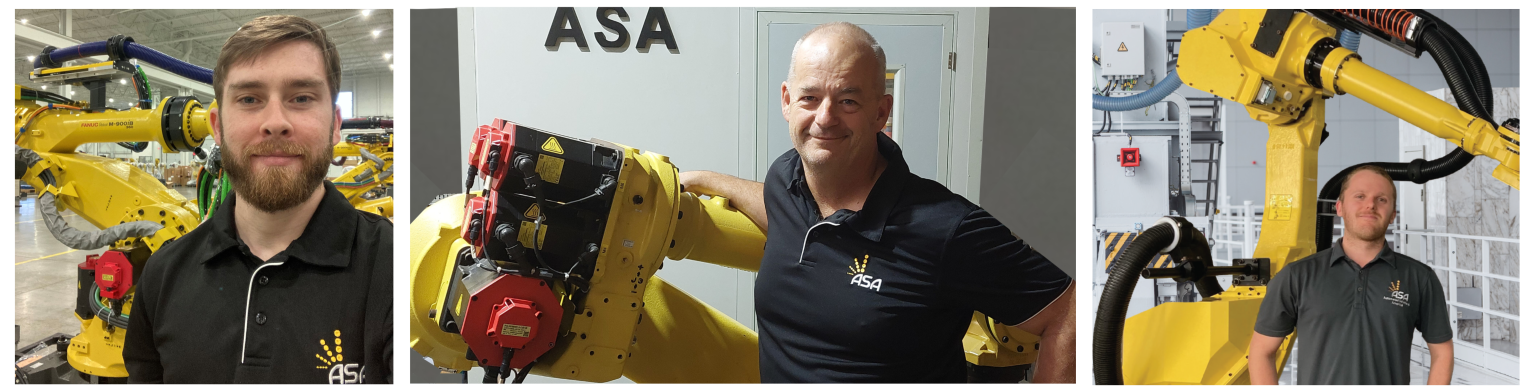
Image credit: automatedsolutions.com.au
Check out the seconds between the products
Manufacturing inefficiency isn’t always significant. Imagine a worker spending 15 seconds looking for a particular component for 10 seconds, then applying the material and several seconds transferring it. For a single component, the difference is minimal. When repeated thousands of times however, those seconds become important production times.
It’s the same with waste material. A small amount of excess coating or dispensing material that is multiplied throughout a production run that is high-volume can become a meaningful expense.
Businesses considering robotic automation Australia projects can benefit from looking at these small, repeated losses before deciding what equipment they need. ASA’s analysis of needs is designed to identify problems with quality and bottlenecks as in addition to waste and other constraints in a plan.
The robot should fit the system around it.
Robots are just one of many engineering choices. The system might also require guarding, tools and controls, sensors fixtures, conveyors, electrical integration, and communication with existing production equipment. Engineers should take into consideration the reach, payload and how the robot will be able to move and interact within the environment.
ASA provides concept development, system design, CAD simulation, and offline programming as part of its approach to FANUC robotic automation. Engineers are able to explore configurations for the system and estimate cycles before the finalized system is placed on the floor of the factory. It’s particularly useful when there is a limited amount of space, or when the new robotics requires integration with a production line.
Dispensing and Paint Shows Why Replicability is Crucial
Controlled movement is crucial in some manufacturing processes. Imagine applying a coating to hundreds of parts. The end goal isn’t simply complete each component at a rapid pace. It’s important to control the speed, distance, and movement of each component from the beginning to the very end.
ASA is a specialist in painting and dispensing systems across a range of industries including automotive as well as aerospace. In these environments, industrial robotic automation can provide repeatable programmed movement while reducing exposure of employees to physically demanding and potentially dangerous processes.
A better control system can also help reduce excessive material consumption, thereby contributing to a decrease in waste as well as productivity improvement.
Even after the installation the system requires users
Automation doesn’t eliminate the need for expertise in manufacturing. The skills required to manage, maintain, and run the process change.
Employees must be taught to operate equipment in a safe manner in order to identify any abnormalities and troubleshoot malfunctioning components and complete any necessary maintenance. Production requirements can change, meaning programs and processes may need modifications later.
ASA offers training on-site covering safety, programming troubleshooting, mechanical and electric maintenance. Additionally, the company provides maintenance and ongoing support to monitor the condition of the equipment and deal with problems that arise over the system’s operational life.
Capacity is about more than Working Faster
For Australian manufacturers, increasing capacity doesn’t mean purchasing larger buildings or adding more workers to repetitive processes. It is sometimes better to inquire if the manufacturing process could be redesigned.
ASA has been developing and integration of automation solutions since 2002. It supports manufacturers in Australia as well as international projects. Its approach connects needs analysis with engineering, simulation, FANUC robot integration training, servicing, and maintenance.
Automation is not just for the sake of automation. An investment-worthy system should provide a company with quantifiable results, which include better production reliability, higher quality, safer processes, reduced waste or increased capacity.